London Bus Forums News has obtained a recording in which an Arriva London bus driver who refused to continue driving after reporting a temperature of 43°C inside his bus cab is told he has been marked absent and can go home.
An Arriva bus driver in London who refused to continue operating a bus after saying the temperature inside his bus cab had reached 43°C was told he had been marked absent and could go home, an exclusive recording obtained by London Bus Forums reveals.
The recording, made on Wednesday 12 August, captures a conversation between the driver and a controller after the driver refused to continue with a bus because the air conditioning was not working.
During the call, the driver is told he has been “marked absent for today” and can go home.
He challenges the decision, saying: “But I’m not absent. The bus is simply too hot to drive, 43 degrees in the cab.”
The controller later repeats that he has been marked absent and indicates the instruction had come from management.
The case raises questions about how drivers are treated when they refuse to continue operating a vehicle because they believe conditions have become unsafe.
The case is particularly significant because air conditioning in London bus driver cabs has been a TfL vehicle specification requirement since 2006.
Driver air conditioning is separate from the air-cooling systems used in passenger areas of the bus. TfL’s specifications require the driver’s system to operate independently from the passenger saloon system.
Bus operators running TfL-contracted routes are required to use vehicles that meet the relevant London bus specifications, meaning driver air conditioning forms part of the standards expected on vehicles used to operate those services.
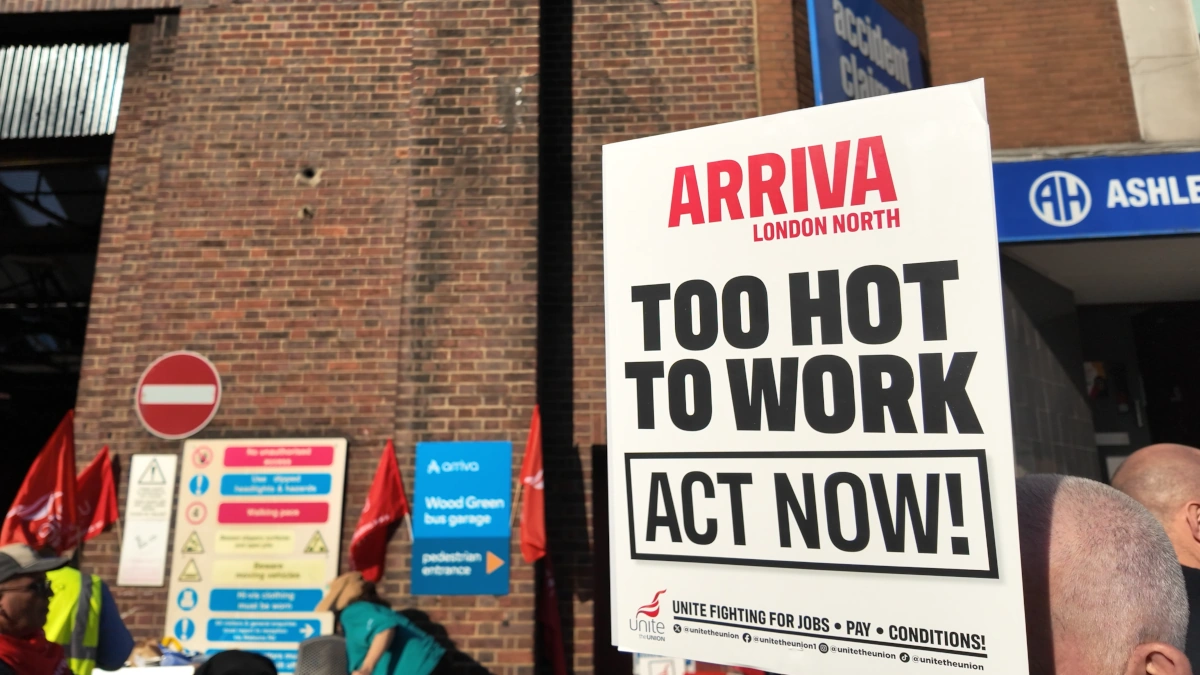
The recording emerged as more than 1,500 Arriva bus drivers began strike action across north London and parts of Essex.
Drivers from eight Arriva garages are involved, with 42 routes affected and 26 strike days planned across August, September and October.
Arriva bus driver describes ‘unbearable’ heat
London Bus Forums was at Wood Green bus garage on the first day of the strike, where drivers repeatedly raised concerns about temperatures inside buses and faulty or ineffective air conditioning.
One driver said the main issue was buses operating without effective air conditioning, telling us both drivers and passengers were suffering.
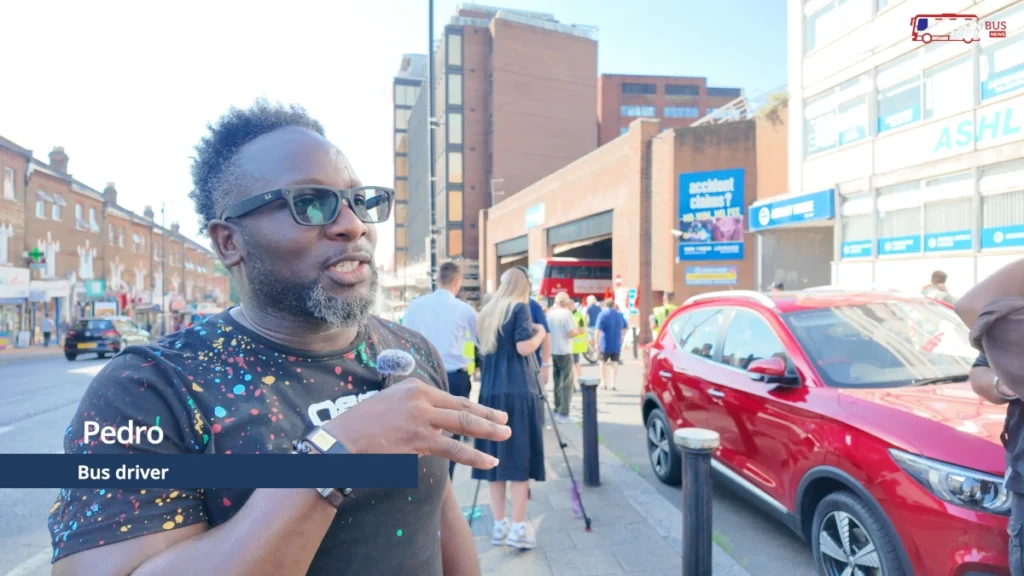
Pedro, who said he had worked as a bus driver for around 12 years, described the conditions as the worst he had experienced.
Credit: London Bus Forums
He said he completed a journey on route 29 from Trafalgar Square the previous day and returned to the garage with his shirt soaked through.
Asked what he would do if a bus became too hot to operate, he said: “I refuse the bus. I will refuse the bus. I’ll bring it back if it’s too hot to drive.”
He also described mixed responses when drivers report excessive heat, saying some controllers allow a welfare break while others may tell a driver to continue to the end of the route.
ITV News London has also reported extensively on working conditions faced by London bus drivers, including concerns over extreme heat, fatigue and access to toilet facilities. Its coverage of the Arriva strike included warnings from drivers that temperatures above 40°C could put both drivers and passengers at risk.
Unite representative Peter Skinner said drivers were striking because buses had no working air conditioning or insufficient cooling.
He said years of talks and working groups had failed to resolve the dispute, describing industrial action as a “last resort”.
Asked about drivers who believe they are being penalised for refusing buses because of the heat, he said they should speak to their union representative.
He added: “Ultimately that wouldn’t have to happen if the buses were fixed.”
The concerns come as animal welfare organisations routinely warn of the dangers of enclosed vehicles during hot weather.
The RSPCA says dogs should never be left in vehicles during warm weather, warning that temperatures can rise rapidly inside an enclosed vehicle. The legal framework for employees is entirely different from animal welfare law, but the comparison illustrates how quickly heat can become dangerous inside enclosed spaces.
In workplaces, there is currently no statutory maximum temperature in UK law, but employers are required to assess and manage risks posed by excessive heat.
What Arriva and TfL say
Arriva said extreme heat was creating challenges across London’s bus network and that driver welfare remained a priority.
Arriva told us that additional support had been introduced during periods of hot weather, including regular breaks and welfare checks.
It said drivers concerned about excessive temperatures should stop at the next safe location, transfer passengers and take a 20-minute welfare break before contacting the control team.
Wasim Mohammed, managing director of Arriva London, has previously said the company is investing in improvements to air-conditioning systems and new vehicles.
Arriva has not said that marking drivers absent after refusing to continue in extreme heat is a company-wide policy.
However, the recording shows an Arriva bus driver being told he had been marked absent. After refusing to continue with a bus because he said the temperature had reached 43°C and the air conditioning was not working.
Transport for London told us that drivers who do not feel able to carry out their duties safely should contact their controller and that action should be taken to support them.
TfL Commissioner Andy Lord has also previously said drivers should feel able to take a bus out of service where there is a problem with air cooling or air conditioning.
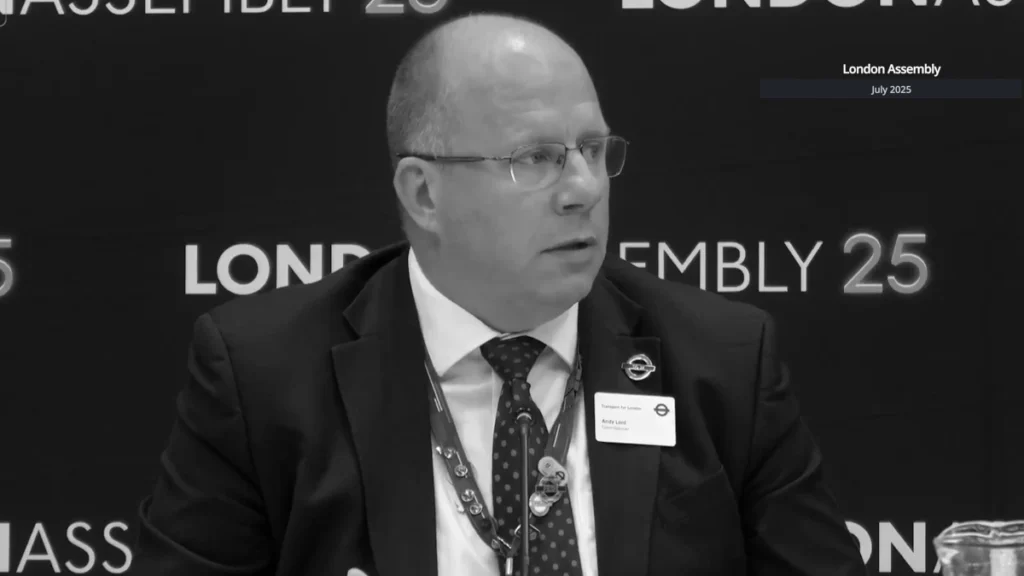
Tom Kearney, from London Bus Watch, told London Bus Forums that he had previously published correspondence relating to TfL’s bus safety principles. He said:
“On 15 May 2018, TfL’s Managing Director for Surface Transport confirmed in writing our agreement on ‘three key principles’ on bus safety policy in London:”
‘The first is that accountability and responsibility for bus safety must rest ultimately with TfL. It cannot be devolved to the bus operators individually. The buck stops with us.
‘The second is that our approach to bus safety must mirror the rigour and discipline of our approach to rail safety.
‘The third is transparency.’
“The Mayor’s clear instructions to London’s bus drivers that they must refuse any bus operator’s vehicle they feel is unsafe to operate for whatever reason clearly reflects that first principle.
“Accordingly, since ‘the buck stops with TfL’, its deflection of ‘accountability and responsibility for bus safety’ to bus operators, as clearly shown in its recent press statement to London Bus Forums, begs the question: is TfL a negligent contractor?”
The circumstances captured in the recording therefore raise questions about whether the way the driver was treated is consistent with the assurances given to bus drivers who raise concerns about working in excessive heat.
When will the Arriva strikes take place?
The currently announced strike dates are:
14-15 August – Friday-Saturday- 18-21 August – Tuesday-Friday
- 25-28 August – Tuesday-Friday
- 4-5 September – Friday-Saturday
- 7-8 September – Monday-Tuesday
- 18-19 September – Friday-Saturday
- 21-22 September – Monday-Tuesday
- 2-3 October – Friday-Saturday
- 5-6 October – Monday-Tuesday
- 16-17 October – Friday-Saturday
- 19-20 October – Monday-Tuesday
Further strike action remains scheduled across August, September and October unless Arriva and Unite reach an agreement.
Watch our full report from Wood Green
London Bus Forums News was at Arriva’s Wood Green bus garage on the first day of the strike, speaking to drivers and Unite about working conditions, extreme temperatures and faulty or ineffective air conditioning.