


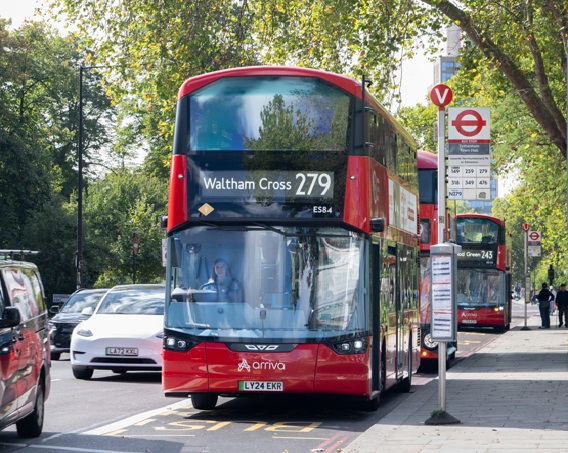
New safety standards have been announced for future London buses, with changes expected to affect driver cabs, onboard technology and vehicle design.
Transport for London has set out the second phase of its Bus Safety Standard, which will apply to buses entering service up to 2030.
The new requirements include redesigned driver cabs, improved visibility, enhanced braking systems and technology aimed at preventing buses from moving off when pedestrians or cyclists are directly in front of the vehicle.
TfL says the measures have been developed with bus operators, manufacturers and safety specialists.
London buses driver cab changes
A key part of the new standard is a redesigned driver cab.
TfL says the updated cab design is intended to improve comfort, inclusivity and safety for drivers.
The cab is one of the most important parts of a London bus, with drivers spending long shifts behind the wheel while managing traffic, passengers, road risks and time pressure.
The new standard is expected to influence future cab layouts, including driver visibility, ergonomics and the overall working environment.
Driver welfare has become a major issue across London’s bus network, with concerns regularly raised about fatigue, cab comfort, ventilation, heat, visibility and working conditions.

Image Credit: Bexleybus
New safety technology
The updated standard also includes new technology intended to reduce the risk of collisions.
A Moving Off Information System will be developed to prevent a bus from moving away if a pedestrian or cyclist is immediately in front of the vehicle.
Advanced Emergency Braking systems will also be improved to give greater protection to vulnerable road users.
Another planned measure is low acceleration suppression technology, designed to reduce the risk of a bus accelerating too quickly if the accelerator is pressed unintentionally.
More than 40 buses are expected to trial new safety systems before wider rollout across the fleet.

Image Credit: Bexleybus
The Bus Safety Standard was first introduced in 2019 and has already influenced the design of buses used in London.
The second phase will now shape the next generation of vehicles entering service in the capital. TfL says the new requirements will give manufacturers and operators clearer expectations for future bus design.
The announcement comes at a time when bus safety and driver welfare remain under close scrutiny. While TfL has presented the new standard as a major step forward, many drivers will want to see these promises translate into real improvements on the road.
Campaigners and drivers have repeatedly argued that safety improvements must go beyond vehicle technology and also address working conditions, fatigue, rest time, cab design, ventilation and support for bus drivers.
For drivers, the key test will be whether the new standards lead to safer, more comfortable and more practical cabs, alongside technology that supports them during daily service.
More updates can be found in our Transport for London news section.
















All good and well but the real change needs to be to rolling rota’s length of dutys and length of meal relief breaks.
and cab air conditioning!! tfl take driver safety and welfare seriously?? 🤬
Like hell it dose
Fatigue is big concern for me bus companies are making longer duties at weekends i.e. Saturday and Sundays adding extra roundas to the duty also not giving enough running time now we have 20mph speed limit tfl need to approach every bus company over this