Almost a kilometre of Oxford Street is now traffic-free, with bus routes diverted and concerns raised over congestion and access to public transport.
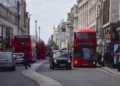
Oxford Street pedestrianisation began on Monday 26 October, with almost a kilometre of the road between Orchard Street and Great Portland Street now closed to traffic.
Following two public consultations in 2025 and early 2026, the affected stretch is now closed to cars, buses, taxis and bicycles, with bus services diverted onto surrounding roads.
The bus changes began on Saturday 24 October, with the following routes affected:
- Route 7 now terminates at Marble Arch instead of Oxford Circus.
- Route 94 now terminates at Marble Arch instead of Piccadilly Circus.
- Routes 98, 139 and 390 have been diverted away from Oxford Street, using surrounding roads including Wigmore Street and Henrietta Place.
- Night buses N7, N113 and N137 now terminate at Marble Arch, while the N98 and N207 have also been diverted via Wigmore Street and Henrietta Place.
In a piece for The Guardian, Mayor Sadiq Khan hailed the pedestrianisation as “the start of a momentous new era” for the nation’s high street, acknowledging that this was only the beginning and that a review period would take place throughout 2027.
He said seven in ten Londoners supported his wider vision for Oxford Street and stressed the importance of reclaiming the road for “pedestrians, not traffic”. A consultation in 2025 found that 66 per cent of respondents who answered the question about pedestrianisation supported the principle of the scheme.

Image: Ari Nas
John Bull, who drove the former route 10 bus along Oxford Street before its withdrawal in 2018 as part of earlier efforts to reduce traffic, told London Bus Forums News that the crowded nature of the high street had raised safety concerns, particularly for drivers under pressure to keep to their timetables.
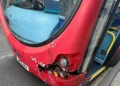
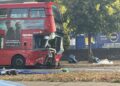
Tom Kearney, who launched a long-running campaign to pedestrianise Oxford Street after recovering from being critically injured by a route 73 bus operated by Arriva in 2009, told London Bus Forums News:
While the pedestrianisation of Oxford Street starting 26 October 2026 achieves Vision Zero on a 1km stretch of Central London road, the Mayor’s refusal to incorporate the Bus Drivers’ Bill of Rights into TfL’s Framework Bus Services Contract simply displaces known bus safety risks to surrounding streets where the buses have been rerouted. I honestly fear that the export of bus-related deaths from Oxford Street elsewhere will end up serving as the Mayor’s legacy.
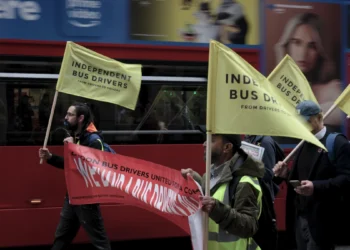
The proposed Bus Drivers’ Bill of Rights calls for stronger protections covering working conditions, rest breaks and driver safety.
Khan previously clashed with Westminster City Council after the council raised concerns that the changes could worsen traffic and have a negative environmental impact on surrounding roads.
Conservative London Assembly member Andrew Boff also argued that the Mayor had not adequately consulted those affected by the pedestrianisation, particularly disabled Londoners.
Concerns have also been raised about the impact of diverted traffic on nearby streets, amid fears that it could worsen congestion. The changes could mean longer walks to bus stops for some passengers, with TfL acknowledging that older and disabled people may face additional difficulties.
Other visitors, however, have welcomed the pedestrianisation, saying it makes Oxford Street more pleasant to walk around and describing the initiative as exciting.
Further improvements are planned for 2027, including new public squares, seating, improved signage and opportunities for live events as part of the Mayor’s wider plans to transform Oxford Street.