
Campaigners will gather at Lambeth North on 5 November as pressure mounts on Mayor Sadiq Khan to strengthen driver protections following years of complaints over working conditions.
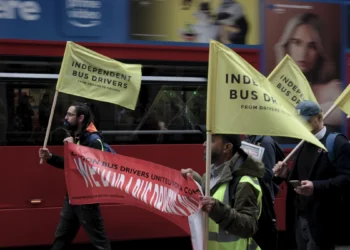
London bus drivers are preparing to march on Transport for London’s headquarters next month as they continue their campaign for stronger protections following years of complaints about working conditions across the capital’s bus network.
Independent drivers are continuing their campaign for a 12-point Bus Drivers’ Bill of Rights to be incorporated into TfL’s Framework Bus Services Contract, following a unanimous vote of support by the London Assembly in July.
Campaigners are due to gather outside Lambeth North Underground station at 11am on Thursday, 5 November, before marching to TfL’s Palestra headquarters in Southwark.
TfL announced on 9 September that air conditioning would be upgraded in all London bus drivers’ cabs by the end of May 2027, following years of complaints about excessive temperatures.
The agreement was reached between the Mayor, TfL, Unite the Union and London’s bus operators through an extreme weather taskforce.
However, just over a week later, Mayor Sir Sadiq Khan declined to guarantee the deadline would be met when questioned by Green Party London Assembly Member Caroline Russell.
As reported by Kumail Jaffer of the Local Democracy Reporting Service, the Mayor acknowledged the scale of the work, which could involve retrofitting around 8,000 buses.
“It’s going to be hard,” he said. “I’m determined to get there by the end of May.”
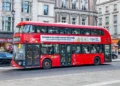
TfL said two New Routemaster buses had already been fitted with upgraded cooling systems for trials, with plans to bring older vehicles up to modern ventilation and air-conditioning standards.

Image: London Bus Forums
The commitment addresses one of the central demands of the Bill of Rights campaign, which calls for functioning air cooling during summer and heating during winter.
Further progress was announced later in September when TfL confirmed funding for 53 additional toilet buildings over the next three years.
TfL initially identified five bus routes requiring new toilet facilities, before ITV News reported that the number was six.
However, further analysis by London Bus Forums News of TfL’s June 2026 Bus Driver Facilities Guide identified nine routes without suitable toilet access, raising questions over the extent of the problem.
The announcements follow months of pressure from independent London bus drivers, who have staged demonstrations and called for stronger welfare protections to be incorporated into TfL’s Framework Bus Services Contract.
Their campaign has been accompanied by sustained investigations by ITV News London, exposing excessive temperatures inside drivers’ cabs, inadequate toilet facilities and fatigue. The reporting prompted public responses from both the Mayor and TfL.
Despite those developments, independent drivers maintain that stronger contractual protections are needed to ensure consistent standards across the network.
The latest march follows a unanimous London Assembly vote on 2 July supporting the principles of the Bus Drivers’ Bill of Rights.
The motion, proposed by Assembly Member Keith Prince, called on the Mayor and TfL to strengthen safeguards covering working hours, rest breaks, vehicle maintenance, welfare facilities and driver safety.
However, Mayor Sir Sadiq Khan has resisted incorporating the proposals into TfL’s framework agreement, arguing that many of the protections already exist under legislation, agreements and other measures.
Campaigners want the 12 rights incorporated into TfL’s Framework Bus Services Contract, arguing that existing protections have failed to address longstanding concerns over working conditions.
The proposed Bus Drivers’ Bill of Rights sets out 12 demands:
- The right to a safe work schedule without forced overtime or loss of pay.
- The right to a decent and proper rest break during the working day.
- The right to drive a safe and well-maintained vehicle.
- The right to clean, serviced toilets and rest facilities on every bus route.
- The right to report safety concerns without fear of retaliation from TfL or employers.
- The right not to be pressured into returning to work while medically unfit and covered by a doctor’s note.
- The right to relevant and timely safety training.
- The right to drive without being forced to answer radio messages or texts from controllers while the vehicle is moving.
- The right to have all company rules in writing and clearly displayed.
- The right to be treated with dignity and respect by employers, TfL and the public.
- The right to functioning air cooling in drivers’ cabs during summer.
- The right to functioning heating in drivers’ cabs during winter.

Image: London Bus Forums
The campaign has gathered wider attention following a series of demonstrations and investigations into conditions faced by London bus drivers.
In August, MyLondon launched its Back Our Bus Drivers campaign, highlighting what it described as inhumane working conditions and calling for improvements to the way drivers are treated.
The campaign followed reporting on excessive temperatures inside bus cabs, fatigue, inadequate welfare facilities and the pressures faced by drivers across London’s bus network.
Independent drivers also staged a rally outside TfL’s HQ Palestra House on 6 August, a month after the London Assembly backed the proposed rights.
The demonstration was organised by drivers independently of the trade unions, with campaigners calling for the Assembly’s decision to be translated into enforceable protections.
Working conditions have faced further scrutiny following reports of drivers being unable to continue working in excessively hot vehicles.
In August, London Bus Forums News reported on an Arriva driver who was told he had been marked absent and could go home after refusing to continue driving a bus in which he reported a cab temperature of 43°C.
The incident raised questions about how drivers can raise safety concerns without facing financial or disciplinary consequences.
TfL has maintained that it is working with operators and Unite to improve conditions, including through changes to vehicle specifications, welfare facilities and measures intended to reduce fatigue.
In his response to the London Assembly’s Bill of Rights motion, Sir Sadiq argued that improving existing initiatives was preferable to reopening contracts to repeat protections already contained in legislation or other agreements.
Campaigners dispute whether those arrangements provide sufficient protection in practice.
The planned 5 November march will bring drivers back to TfL’s headquarters as they continue pressing for the proposed rights to be formally incorporated into the framework agreement.