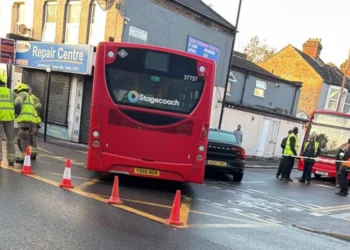
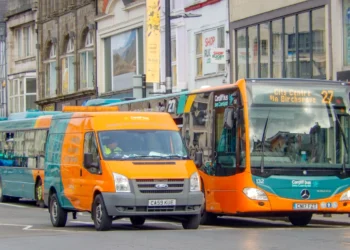
As Cardiff Bus workers vote on strike action over disputed pay deductions, London’s own experience of dangerously hot bus cabs raises questions about how drivers are treated when they refuse to continue.
A bus driver who believes their vehicle is too hot to operate safely should not have to worry that stopping could cost them their wages.
Yet that is the issue at the centre of a dispute in Cardiff, where more than 500 bus company employees are being balloted for strike action after 11 bus drivers had their pay stopped during the summer heatwave.
Voting closes on 4 November, with any industrial action dependent on the result.
The union says temperatures inside drivers’ cabs reached 40C, with one driver becoming so unwell they required medical attention.
Cardiff Bus has said employee and customer safety remains its highest priority and that additional measures were introduced during the heatwave. The operator says it remains committed to constructive discussions with Unite.
But the dispute raises a question that London bus drivers will recognise only too well. What happens when a driver believes a vehicle is no longer safe to operate?
In August, London Bus Forums News obtained a recording of an Arriva London driver being told he had been marked absent after refusing to continue driving a bus in which he reported a cab temperature of 43C.
The driver said the air conditioning was not working and challenged the decision, maintaining that he was available for work but could not safely continue operating the vehicle.
Arriva subsequently said drivers concerned about excessive temperatures should stop somewhere safe, arrange for passengers to transfer and take a welfare break before contacting control.
There is an obvious difference between refusing to work and refusing to operate a vehicle because of a genuine safety concern. Employers need procedures that recognise that distinction.
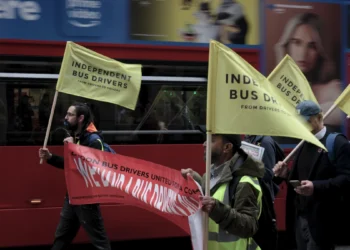
More than 1,500 Arriva North London drivers took industrial action this summer over working conditions, including concerns about ineffective air conditioning and excessive cab temperatures.
In September, the Mayor of London, TfL and Unite agreed to retrofit bus driver cabs that fall short of modern air-conditioning standards by the end of May 2027.
But complaints about sweltering cabs are hardly new. Bus drivers raised cooling problems directly with Sadiq Khan on LBC as far back as 2018, while City Hall has faced repeated questions about the effectiveness of existing systems. Why has it taken until now to agree a fleet-wide upgrade?
The timetable itself has already been questioned. Just eight days after the agreement was announced, Khan was asked whether the deadline could be met, with London Assembly member Caroline Russell saying around 8,000 buses needed retrofitting.
The Mayor acknowledged that completing the programme would be difficult, saying: “It is going to be hard.” He nevertheless maintained that he was determined to meet the May deadline.
TfL says newer buses have improved air-conditioning standards and trials are under way to upgrade older vehicles. The scale of the task is considerable, but drivers still need protection when cooling systems fail before those improvements arrive.
There is no statutory maximum workplace temperature in Britain. The Health and Safety Executive nevertheless makes clear that employers must assess and control risks associated with excessive heat.
A temperature reading alone cannot determine every safety decision. Conditions, exposure, available cooling and the driver’s wellbeing must all be considered.
But drivers should have confidence that reporting a genuine safety concern will result in a proper assessment, not an automatic assumption that they are refusing their duties.
Unite is seeking a formal adverse-temperature policy at Cardiff Bus, including clearer safeguards for workers facing extreme conditions.
The circumstances of individual pay decisions must be examined fairly, and the company is entitled to respond to the allegations against it. The ballot itself does not mean strike action is inevitable.
Bus drivers are responsible for their passengers and everyone else sharing the road. They need clear procedures, effective cooling systems and meaningful protection when they believe it is unsafe to continue.
A safety policy is only as good as the response a driver receives when they raise the alarm.