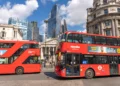
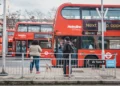
London has marked a new milestone in its drive to improve air quality, with more than 3,000 zero-emission buses now operating across the capital.
Transport for London said around a third of London’s bus fleet is now zero-emission, compared with just 30 buses in 2016.
The latest zero-emission bus has entered service on route 174 between Harold Hill and Dagenham Marsh Way, serving Romford, Rainham and Dagenham.
The rollout means London now has the largest zero-emission bus fleet in Western Europe, according to TfL.
The capital is aiming to convert its entire bus fleet to zero-emission vehicles by 2034, although TfL has previously said this could happen earlier if funding is available.
The switch to electric and hydrogen-powered buses is part of wider efforts to cut pollution, improve air quality and reduce carbon emissions from London’s transport network.
Converting the full London bus fleet to zero-emission vehicles could save around one million tonnes of carbon over the next 20 years.
Zero-emission buses in London
Lorna Murphy
Director of Buses at Transport for London
“This is more than a milestone; it is real visible change – cleaner journeys for Londoners every day.
“With a third of London’s fleet of iconic buses now zero-emission, it is even easier for customers to travel around the city in a sustainable, affordable and accessible way.
“We have the largest zero-emission bus fleet in Western Europe and now more than 3,000 of London’s buses are zero-emission, up from just 30 in 2016, demonstrating the pace of progress as we strive to transition the whole of the fleet.
“We’re brightening up our customers’ journeys in more ways than one, as we’ve also converted all of the lighting at our bus shelters to LED lighting.
“Using less energy, these bulbs will make our bus shelters more welcoming for customers and help them to feel safer, especially at night.
“From new zero-emission buses to LED bulbs, every step we take to decarbonise the public transport network propels us on our journey towards net zero.”
Lighting at all TfL bus shelters has also been converted to LED technology, which is expected to use less energy and improve visibility for passengers, particularly at night.
Recent air quality data shows pollution levels in London have fallen in recent years, with cleaner buses playing a part in efforts to reduce emissions from road transport.
However, while the move to cleaner buses has been welcomed, London Bus Forums News has continued to receive reports from bus drivers raising concerns about cab conditions and safety technology on some newer vehicles.
Drivers have told LBF News that new bus technology must also improve conditions for drivers behind the wheel.
Drivers have reported issues with faulty or ineffective cab air conditioning on some Alexander Dennis Enviro400EV Electroliner and Volvo BZL electric buses.
Some drivers have also reported extreme cab temperatures, with photographs and videos shared with LBF News showing readings of around 40°C during hot weather.
LBF News has also independently observed speed-limiting technology not being active on four separate buses, after drivers demonstrated the issue during journeys.
The technology is designed to help prevent buses exceeding road speed limits, but drivers have raised concerns that it is not always active in service.
Drivers who spoke to LBF News believe this may be linked to tight running times and pressure to recover lost time on the road.
The reason for the systems not being active has not been confirmed by TfL or the relevant bus operators.
However, drivers say safety technology should not be disabled or left inactive where it is intended to reduce risk for passengers, road users and staff.
Drivers also say it is unacceptable for new zero-emission buses to be promoted as part of a cleaner and modernised fleet while some drivers continue to report excessive heat inside the cab.
Driver welfare must remain central to the rollout of new bus technology, particularly as London faces hotter summers and more frequent extreme weather.
The move to cleaner buses is a major step for passengers and air quality, but drivers say the vehicles must also be safe and comfortable for those working long shifts behind the wheel.
More zero-emission buses are expected to enter service across London as older diesel vehicles are replaced.