London bus drivers are calling for urgent action after repeated reports of cockroach infestations in cabs and staff rest areas across the capital. Drivers say conditions have become unacceptable, with many describing the situation as both a health risk and a threat to safety for workers and passengers.
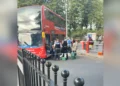
On Wednesday 5 November, drivers gathered at Islington Green before marching to Palestra House, the headquarters of Transport for London. Hundreds turned out to demand urgent improvements to working conditions on Transport for London’s bus network.

Image © London Bus Forums™
Many drivers have highlighted that the issue is not isolated. Cockroaches have been spotted in several depots and buses, especially in staff kitchen areas and rest rooms. Images circulated among drivers show cockroaches moving across food storage areas and near seating used by staff during breaks.
Along with calls for immediate pest control, drivers have renewed demands for improvements to overall working conditions. They explain that most shifts are ten to twelve hours long, often allowing for only a single short break. Several drivers say access to toilets is limited or nonexistent on many routes, making shifts even more difficult. Some have reported feeling unwell or passing out due to the heat in poorly ventilated cabs during summer months.
Staff shortages have added further pressure. Many drivers report working longer hours and more consecutive days than in past years, with little opportunity for meaningful rest. Drivers are also often required to respond to radio messages while the bus is in motion, raising concerns over safety both for themselves and their passengers.
These complaints have led workers to call for a Bus Drivers’ Bill of Rights. The campaign asks for clear, written protections in Transport for London contracts, including regular deep cleaning of buses, scheduled breaks, safe and clean rest areas, fully functioning toilets, and a guarantee that drivers will not be penalised for raising safety concerns.
For a full breakdown of why these issues lead to strike action, see our London Bus Strikes – The Complete 2025 Guide.
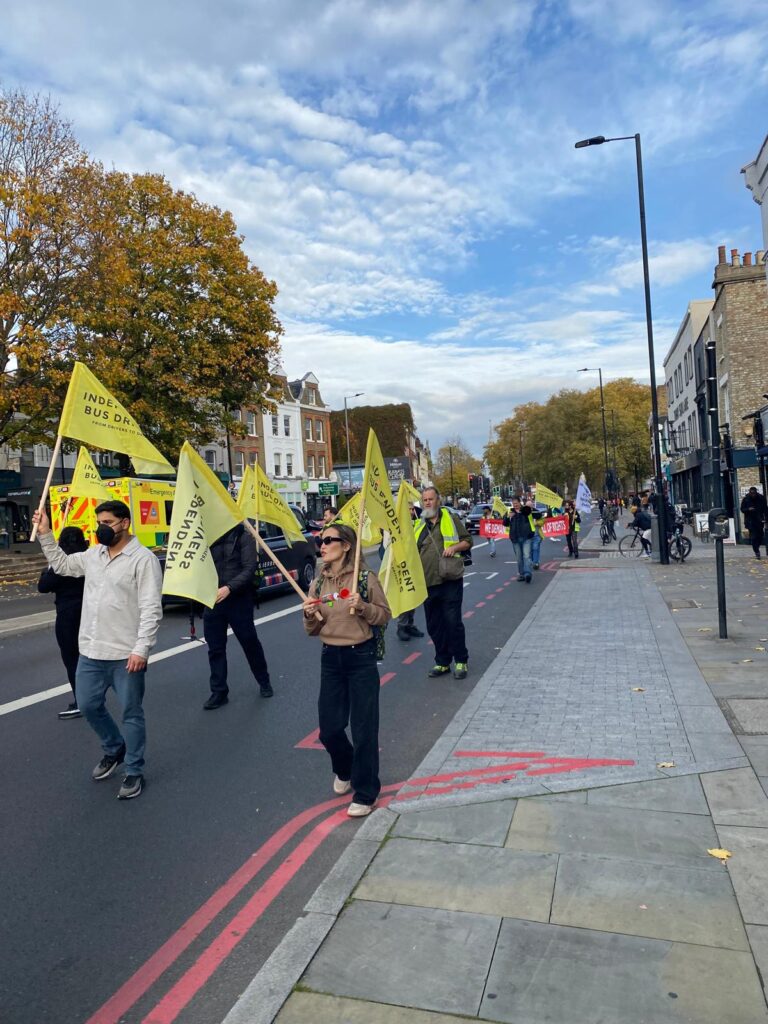
Image © London Bus Forums™
At the march on 5 November, hundreds of drivers and supporters gathered outside TfL headquarters, displaying signs and sharing personal stories about life behind the wheel.
Among those who joined the recent march was Arthur, a member of the public with deep personal reasons for supporting the drivers. Arthur spoke on video about his cousin, a bus driver in Crawley, who has sometimes found conditions so poor that he must urinate against a wheel during quiet moments because there are no toilet facilities available. Arthur described these conditions as degrading and lacking basic humanity, echoing many of the points raised by drivers themselves.
Arthur’s own experience highlights the everyday dangers faced by both drivers and passengers. He recounted a serious injury he suffered after falling down the stairs on a double-decker bus in Archway, an accident which left him with eight broken ribs, a broken collarbone, and further complications that put him in intensive care. “I almost died,” he shared. While he does not blame the individual driver or the company for his near-fatal accident, he says that the risks are real and the need for safer buses is urgent.

Image © London Bus Forums™
He also spoke about the everyday safety challenges encountered on buses. “Several times, I’ve almost been thrown when the bus lurches while getting off. You have to really hold on tight to the handrails. I never go upstairs anymore because I regard it as really dangerous.”
His experience, shared at the march, was a pointed reminder that calls for better working conditions are inseparable from public safety.
Arthur’s full interview video is included below, providing a powerful account of why the campaign for improved conditions matters far beyond the drivers themselves.
Unite the Union initially supported the Bus Drivers’ Bill of Rights campaign, but for reasons that are unclear they are no longer backing bus drivers on this issue. Many drivers have expressed disappointment and confusion about this change in stance, and are now organising independently to keep pressure on both employers and authorities for permanent improvements. London Bus Forums has contacted Unite the Union for comment.
Transport for London has responded by saying it is committed to worker safety and is increasing inspections and pest control treatment at depots where reports are highest. It states that contracts already require operators to maintain buses and facilities to a high standard.
Lorna Murphy, TfL’s director of buses, said:
“Bus drivers play an essential role in keeping the capital moving. Alongside bus operators, we take their safety and welfare seriously and we rightly require operators to meet high standards.
We are working together on a range of measures to further improve working conditions, health and wellbeing. We are committed to ensuring that all staff have a fair work schedule, with safe vehicles and access to the facilities they need to carry out their roles effectively. We would like to reassure colleagues again that any reports from drivers are always fully investigated, and our operators should never take action against people raising concerns about welfare. We value all feedback from the thousands of people who work tirelessly to keep London’s bus network moving, and will carefully consider any proposals for improvements to safety and welfare.”
Drivers remain sceptical, saying the problems are ongoing and demand urgent and lasting solutions, not just promises. They warn that unless standards improve, both recruitment and retention of drivers will continue to suffer, potentially making London’s bus services less reliable for everyone who depends on them.
The Bus Drivers’ Bill of Rights petition has gathered thousands of signatures and continues to gain support. Drivers say they will not back down from their demand for safer, cleaner, and fairer working conditions across the city’s bus network.