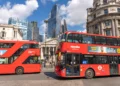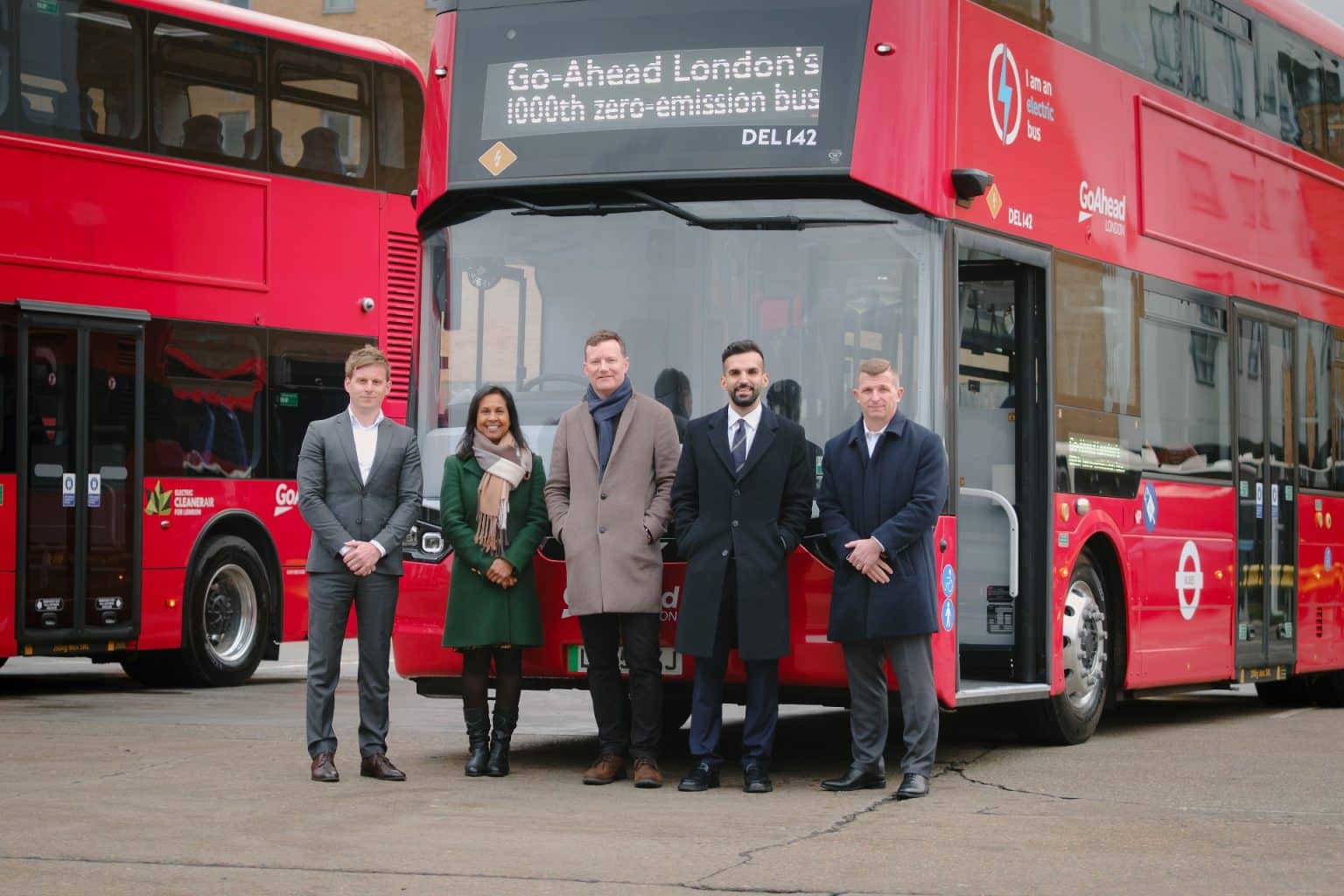
London has reached a new milestone in its drive for cleaner air and greener transport as Go-Ahead, the capital’s largest bus operator, launched its 1,000th electric bus this week.
The landmark vehicle was unveiled at one of Go-Ahead’s 13 London depots now fitted with charging infrastructure, joining a growing fleet that has rapidly expanded from just 30 electric buses in 2016. The company, which operates 170 routes for Transport for London (TfL), now boasts nearly half its London fleet as fully electric, making it the UK’s largest operator of zero-emission buses.
London’s Deputy Mayor for Transport, Seb Dance, celebrated the achievement: “London is leading the charge on zero emission buses, with Go-Ahead’s 1,000th electric bus joining our 2,800 strong zero emission fleet. It’s a key step towards our ambition of a 100 per cent zero-emission bus fleet by 2030.”
The capital’s green bus fleet is part of a bigger push to improve air quality. According to TfL, road vehicles are the single biggest cause of London’s air pollution, producing almost half the city’s nitrogen oxides. Recent figures show that the city’s air is getting cleaner faster than anywhere else in England, with a 31% drop in dangerous particulates in outer boroughs since the expansion of the Ultra Low Emission Zone.
How Go-Ahead’s Electric Buses Are Changing London
Go-Ahead’s Managing Director, Andy Edwards, called the milestone a “landmark moment” for the company and the city. “We’re immensely proud of the role we’re playing in making London’s air safer and journeys greener,” he said. “We’re committed to running a fully zero-emission fleet across the UK by 2035, but our work in London is leading the way.”
The electric buses, mostly double-deckers, are not only cleaner but quieter, offering a smoother ride for the city’s millions of daily bus passengers. For drivers, the switch means cooler, less noisy cabins, and for residents, less street-level pollution and noise.
Each electric bus represents a major investment, with costs approaching £430,000 per vehicle. Charging the buses has required upgrades at depots and new infrastructure across the city. But the environmental payoff is significant: Go-Ahead estimates its 1,000 electric buses are cutting London’s carbon emissions by around 60,000 tonnes every year.
City Hall has set a bold target for all of London’s 9,000-strong bus fleet to be zero-emission by 2030, although the official Transport for London plan is for 2034. For now, over 2,800 zero-emission buses are already operating, with more on the way every month.
Passengers on the new vehicles have noticed the difference. “It’s quieter and cleaner and just feels more modern,” said Maria, a commuter from Brixton. “You can tell the air is better, especially on busy routes.”
The environmental benefits are not just theoretical. Public health experts have linked diesel emissions to asthma and cardiovascular disease, and London’s efforts to cut pollution are already showing results. “Every bus that switches from diesel to electric means less pollution for all of us,” said Dr. Aisha Patel, a respiratory specialist at a south London hospital.
London’s progress has caught international attention, with cities like New York and Paris studying its approach to bus electrification. The International Council on Clean Transportation has called the capital a “global leader” in green public transport.
But challenges remain. Electric buses are expensive, and some routes especially longer ones require careful planning to ensure reliable service as battery technology continues to evolve. Charging infrastructure must keep pace with fleet growth, and central government support is seen as crucial to hitting the city’s ambitious targets.
Still, for Go-Ahead and TfL, the launch of the 1,000th electric bus is proof that London’s clean transport revolution is gaining speed. As the new bus rolled out onto city streets, it did more than just promise a greener future it delivered it, one quiet, exhaust-free journey at a time.
To read more Transport for London news, click here.