Passenger numbers on London buses have risen during previous Underground walkouts, with TfL records revealing the impact on drivers’ working hours and scheduled breaks.
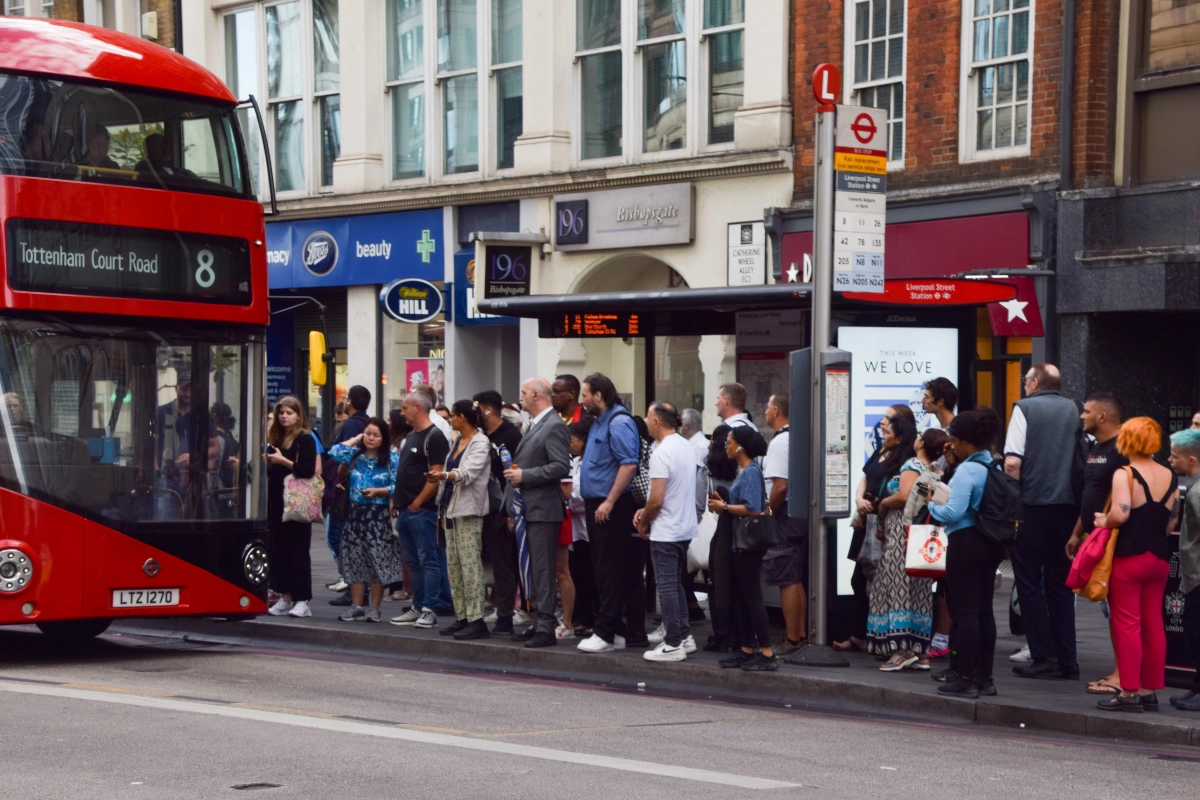
London bus drivers could face heavier passenger loads and increased pressure on services as a series of Tube strikes gets under way, with Transport for London warning that buses will be busier than usual.
Figures from previous Underground walkouts show how disruption can push additional passengers onto London’s bus network, increasing boarding times and adding to delays caused by traffic congestion.
THE KEY POINTS
At a glance
- Piccadilly line strike action is planned for 20-21 November, with parts of the District line also affected.
- Eight separate RMT Tube strikes are scheduled between 26 November 2026 and 25 February 2027.
- TfL has confirmed four replacement bus routes: PL1, PL3, PL4 and PL7, during the Piccadilly line disruption.
- London bus journeys rose by 12 per cent during a Tube strike in September 2025, with TfL warning of busier services during the forthcoming walkouts.
Industrial action by TSSA members working in Piccadilly line service control is expected to cause severe disruption from Friday 20 November, with parts of the District line also affected.
In a separate dispute over TfL’s proposed four-day working arrangements, RMT Tube drivers are due to begin eight 24-hour strikes on Thursday 26 November, with further walkouts planned throughout December, January and February.
Friday’s strike follows the dismissal of a Piccadilly line service control employee who TfL said was working a second paid job while receiving full company sick pay.
The TSSA disputes the dismissal and has accused TfL investigators of improperly accessing and sharing the employee’s confidential information with third parties. The union said almost two dozen service control members voted unanimously for industrial action, on an 83 per cent turnout.
TSSA general secretary Maryam Eslamdoust said: “The unanimous vote for strikes demonstrates the real depth of feeling our members have about this matter.”
Lee Stewart, TfL’s head of London Underground service control, said: “We do not believe industrial action is justified in circumstances where an employee has been dismissed following a fair process and findings of gross misconduct.”
Although London buses are expected to operate as normal, bus journeys rose by 12 per cent during the Underground strike on Monday 8 September 2025, compared with the same Monday a year earlier, according to TfL figures reported by The Guardian.
The increase was also evident during the Tube strike on Tuesday 2 June 2026, when bus boardings rose by 5 per cent compared with the equivalent day in 2025. Underground passenger numbers fell by 41 per cent.
In a letter to Parliament following Tube and National Rail strikes in June 2022, TfL’s then Chief Operating Officer, Andy Lord, acknowledged that increased congestion and longer boarding times had affected London’s bus network.
He said buses were sometimes terminated early to protect drivers’ scheduled breaks and allow them to finish their duties on time.
Lord wrote: “In many cases, drivers have agreed to stay on their shifts longer (within the legal limits).”
Image: iStock/Getty Images
The extent to which drivers’ duties could be affected during the forthcoming strikes remains unclear.
During industrial action in April 2014, more than 260 extra buses were introduced across 44 routes, helping the network carry over a million additional passengers, according to TfL’s Commissioner’s Report.
The prospect of further disruption comes amid existing concerns about driver fatigue and insufficient running times.
A Unite survey of more than 2,000 London bus drivers, published in April, found that 66 per cent frequently experienced insufficient running time, while 53 per cent reported being forced to work overtime or finish late several times a week.
The findings were not specific to Tube strikes but highlighted concerns about the working conditions drivers already face.
Unite has been approached for comment on the potential impact of the forthcoming Tube strikes on London bus drivers.
When are the Tube strikes?
The first walkout, involving TSSA service control staff, is scheduled to begin at 11:59 on Friday 20 November and end at 11:59 on Saturday 21 November.
TfL expects Piccadilly line services to begin reducing from 10:30 on Friday, with no service from midday until Saturday evening. The Friday Night Tube will also be suspended.
On the District line, there will be no service between Earl’s Court and Richmond or Ealing Broadway from Friday midday until Saturday evening, with a reduced service elsewhere.
The separate RMT strikes are scheduled for:
- Thursday 26 November 2026
- Thursday 17 December 2026
- Saturday 19 December 2026
- Monday 4 January 2027
- Wednesday 6 January 2027
- Wednesday 17 February 2027
- Tuesday 23 February 2027
- Thursday 25 February 2027
Each RMT walkout is due to begin at 12:00 and continue until 11:59 the following day.
TfL expects disruption across the Underground during these strikes, although trains are expected to continue operating on most lines.
Which replacement buses will operate?
TfL has confirmed four replacement bus services during the Piccadilly line disruption on Friday 20 and Saturday 21 November.
- PL1: Hammersmith to Osterley, serving Turnham Green, Chiswick Park, Gunnersbury, Acton Town, Ealing Common, Ealing Broadway, South Ealing, Northfields and Boston Manor.
- PL3: Hammersmith to Heathrow Central, operating non-stop during Saturday daytime.
- PL4: Gunnersbury to Rayners Lane, serving Acton Town, Ealing Common, North Ealing, Hanger Lane, Alperton, Sudbury Town, Sudbury Hill and South Harrow. Saturday daytime only.
- PL7: Hammersmith to Heathrow Central via Osterley, Hounslow East, Hounslow Central, Hounslow West and Hatton Cross, with overnight journeys continuing to Heathrow Terminal 5.
TfL’s travel guidance lists PL1 and PL7 for Friday overnight and Saturday daytime operations, while PL3 and PL4 are scheduled for Saturday daytime only. Passengers should check the latest operating times before travelling.
TfL is advising passengers travelling to Heathrow Airport to consider the Elizabeth line as an alternative.
While these replacement buses have been confirmed for the Piccadilly line disruption, TfL has not yet specified whether additional vehicles or driver cover will be provided on ordinary London bus routes during the separate RMT walkouts.