
Unite says drivers face an ‘epidemic of fatigue’ as questions grow over why a 12-point safety plan backed unanimously at City Hall has yet to be written into TfL bus contracts
THE KEY POINTS
At a glance
- Unite says London bus drivers are facing an “epidemic of fatigue”.
- Drivers have raised concerns over working conditions for more than a decade and campaigned for a 12-point Bill of Rights.
- The plan was unanimously backed by the London Assembly but has not been written into TfL’s bus contracts.
London bus drivers are “literally falling asleep at the wheel” because of an “epidemic of fatigue”, a senior union official has warned amid renewed scrutiny of working conditions across London’s bus network.
Nadine Edwards, Unite regional officer for London buses, said drivers were being pushed to exhaustion by long hours, forced overtime and a contracting system which she claims encourages operators to cut costs.
Speaking to MyLondon’s London Brief, Ms Edwards said 48 per cent of drivers who responded to a Unite survey reported having a close call because of fatigue during the previous 12 months.
More than 60 per cent said they were being forced to work overtime on a weekly basis.
“Bus drivers are so tired they’re literally falling asleep at the wheel,” she said.
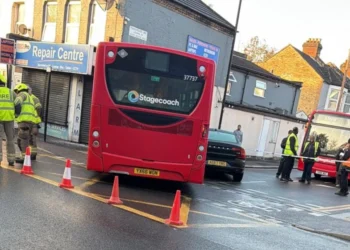
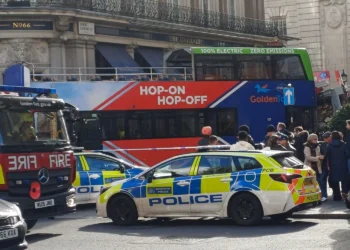
Ms Edwards described fatigue as an “epidemic”, pointing to recent incidents involving buses colliding with pedestrians and buildings.
But warnings about exhausted drivers and poor working conditions are not new.
City Hall records show questions over bus driver fatigue were being raised as far back as 2014. In 2017, a London Assembly investigation found drivers reporting high levels of stress caused by long shifts, inadequate breaks and irregular working patterns, while rest and toilet facilities were described as poor or non-existent.
Two years later, research commissioned by TfL found 21 per cent of surveyed drivers had to fight sleepiness at least two or three times a week. Thirty-six per cent reported having a close call because of tiredness during the previous year.
Those longstanding concerns eventually fed into a driver-led campaign for a Bus Drivers’ Bill of Rights.
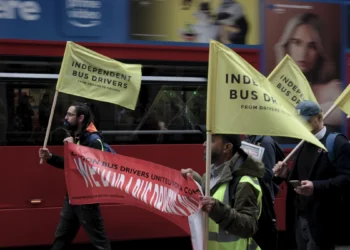
Hundreds of London bus drivers marched to TfL’s headquarters at Palestra on November 5, 2024, demanding a package of minimum protections covering schedules, breaks, toilets, vehicle safety and working conditions.
The demonstration was supported by Unite at the time.
But little more than a month after that demonstration, Unite’s own lead London bus officer was challenged over whether the proposed Bill of Rights was necessary.
In footage seen by London Bus Forums News, Unite’s lead London bus officer John Murphy was challenged by bus driver campaigner Kev Mustafa at Unite’s London regional office on 14 December 2024.
Mr Murphy said existing processes already covered many of the protections drivers were seeking.
When the Bus Drivers’ Bill of Rights was raised, Mr Murphy said: “We have got it.”
Referring to issues including hot and cold buses, he said there were processes already in place, but acknowledged: “The problem that you have is the lack of enforcement on the shop floor.”
He added: “There are processes in place for everything on there, but we don’t enforce it.”
Mr Mustafa challenged that position, arguing that arrangements differed between operators and garages and that minimum protections needed to apply across London.
Mr Murphy said buses should have heating in winter and air cooling in summer and that there should be a toilet at the end of every route.
The exchange exposed an early disagreement over the purpose of the Bill of Rights: whether drivers needed a new London-wide contractual guarantee, or whether existing protections simply needed to be better enforced.
The campaign continued and, in February 2025, a petition calling for the rights to be incorporated directly into TfL’s Framework Agreement for the Provision of Bus Services was formally presented at City Hall by Green London Assembly Member Caroline Russell.
The campaign secured a major political victory on 2 July this year when the London Assembly unanimously backed a motion supporting the principles of the Bus Drivers’ Bill of Rights.
The motion was proposed by Reform UK London Assembly Member Keith Prince and seconded by Alex Wilson. It called on the Mayor and TfL to formally recognise and support the principles of the Bill of Rights and review existing bus contracts to improve protections for drivers.
What is in the Bus Drivers’ Bill of Rights?
The motion sets out 12 principles:
- The right to a safe work schedule without any forced overtime or loss of pay.
- The right to a decent and proper rest break in the working day.
- The right to drive a safe and well-maintained vehicle.
- The right to clean, serviced toilet and rest facilities on all bus routes.
- The right to report safety concerns without fear of retribution from TfL or employers.
- The right, when seriously ill and covered by a doctor’s note, not to be harassed into coming into work until fit to do so.
- The right to relevant and timely safety training.
- The right to drive without being forced to answer radio messages and texts from controllers while in motion.
- The right to have all company rules in writing and clearly displayed.
- The right to be treated with dignity and respect by employers, TfL and the public.
- The right to working air cooling in cabs during the summer heat.
- The right to working heaters in cabs during the cold of winter.
Several of those demands directly overlap with the problems now being highlighted by Unite, including fatigue, forced overtime, rest breaks, welfare facilities and extreme temperatures inside drivers’ cabs.
But the Assembly vote did not make the rights contractually binding.
TfL has questioned whether a separate Bill of Rights is necessary.
Lorna Murphy, TfL’s Director of Buses, told ITV News London in July that the points contained in the proposal were already covered through health and safety legislation, employment law or existing contracts.
Drivers argue that placing all 12 rights explicitly into TfL’s bus contracts would provide clear and consistent minimum standards regardless of which private operator employs them.
Despite the unanimous City Hall vote, they were back outside Palestra on 6 August demanding that the proposals be turned into contractual protections.
That rally was organised by individual bus drivers and took place independently of any trade union, according to ITV News London.
It is against that backdrop that Unite is now mounting its own Fight Fatigue Now campaign.
Ms Edwards blamed TfL’s system of competitively tendering individual bus routes for creating what she described as a “race to the bottom”.
She said operators could seek savings in areas including maintenance, air conditioning and scheduling, contributing to fatigue.
Asked whether protections such as toilet facilities, rest breaks and acceptable working conditions should be explicitly written into TfL contracts, Ms Edwards replied: “Yeah absolutely.”
“A lot more needs to be written into the contracts about how they treat their drivers and expectations of every operator,” she said.
Her comments mark a notable contrast with the position expressed by Unite’s lead London bus officer in December 2024, when Mr Murphy argued that processes already existed for the issues covered by the Bill of Rights and that the principal problem was enforcement.
Ms Edwards now says significantly more needs to be written into TfL’s contracts and that requirements must leave “no space for any ambiguity”.
That raises a wider question over the union’s position: if existing arrangements have failed to prevent the fatigue, forced overtime, inadequate welfare facilities and extreme cab temperatures Unite is now campaigning against, should the protections drivers have been demanding be made contractually binding across London?
She added that the requirements needed to be “really, really clear”, warning that ambiguity could result in operators choosing cheaper alternatives.
Her comments put renewed focus on Unite’s position on the Bill of Rights.
The union supported drivers at the November 2024 demonstration, but the campaign has since continued independently and several of the protections drivers are seeking mirror the issues Unite is now campaigning over.
Ms Edwards was challenged during the MyLondon interview over concerns from some London bus drivers that the union had not been strong enough, with the London Assembly’s unanimous support for the Bill of Rights specifically raised.
She said privatisation had been a “massive hit” for drivers and had created a “race to the bottom”, adding that Unite was “fighting tooth and nail” to improve conditions.
Asked whether Unite could have been stronger over previous years, Ms Edwards pointed to significant pay rises secured by the union at some London operators.
But she acknowledged further pressure was needed.
“We also need to be holding Khan and TfL to account,” she said.
Ms Edwards added that Unite would continue doing so and would “push on that area more”.
She did not explicitly say during the interview whether Unite now supports all 12 principles of the Bus Drivers’ Bill of Rights being written into TfL’s framework contracts.
Mayor Sir Sadiq Khan has also stopped short of backing that approach.
In his response following the Assembly vote, the Mayor said developing initiatives with Unite was the best way to improve conditions rather than “unpicking contracts” to repeat protections which already existed elsewhere.
Bus safety campaigner Tom Kearney has questioned whether further talks between Unite, TfL and bus operators will deliver the changes drivers have been demanding.
In a statement to London Bus Forums News, he said:
“This seems to be another ‘Bus Crash’ of an interview by a senior figure in Unite the Union which confirms my view that British Bus Drivers have long been the UK Labour Movement’s forgotten workers.
“The known safety failures of fatigue-inducing work schedules, hot and cold cabs, lack of toilet dignity for TfL Bus Drivers have been well evidenced, not only just recently by Unite the Union, but for years by independent Bus Drivers, campaigners like me and the London Assembly, which recently unanimously called upon the Mayor to write the 12-point Bus Drivers Bill of Rights into TfL’s over-decade-old Framework Bus Services Contract.
“Unite’s General Secretary’s and its lead London Bus Officers calls for more ‘summits’ and ‘meetings’ with TfL and its Bus Contractors to ostensibly address the safety-critical issues clearly reflected in the Bill of Rights begs the question: since 2016, Unite has had precisely this arrangement through the ‘regular’ Tripartite Meetings plus a representative on TfL’s Board, how will another ‘talking shop’ deliver anything better than the contractually guaranteed Bill of Rights? Whose side is Unite on?”
London Bus Forums News has approached Unite the Union for clarification on whether it supports all 12 principles of the Bus Drivers’ Bill of Rights being incorporated into TfL’s Framework Agreement for the Provision of Bus Services.