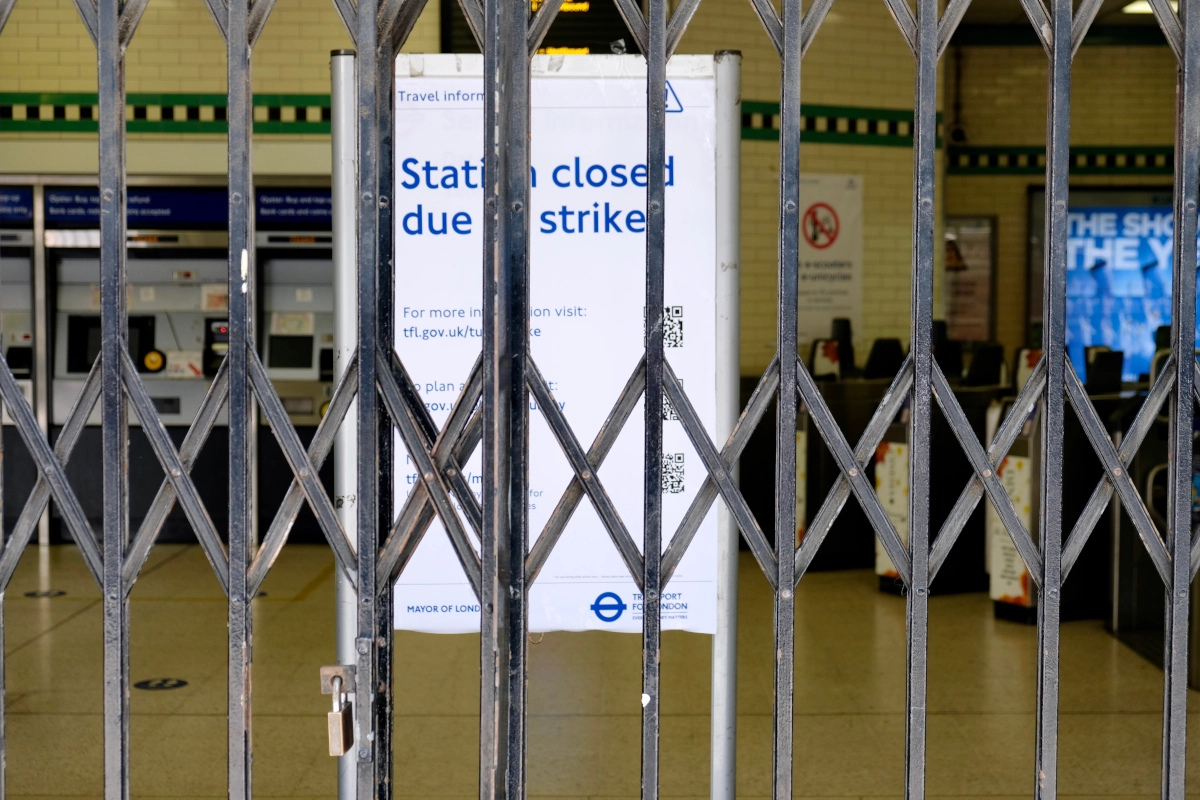
Walkouts planned for December 17 and 19 could disrupt travel during one of London’s busiest shopping weekends.
Tube strikes threaten to disrupt the final shopping weekend before Christmas after the RMT union announced eight 24-hour walkouts by London Underground drivers.
Industrial action is planned for Thursday December 17 and Saturday December 19, with the second walkout falling on the last Saturday before Christmas Day.
The first strike will take place on Thursday 26 November, with further action scheduled throughout January and February.
Each walkout will begin at noon and last for 24 hours, meaning services could also be affected the following morning.
The full list of planned strike dates is:
- Thursday 26 November 2026
- Thursday 17 December 2026
- Saturday 19 December 2026
- Monday 4 January 2027
- Wednesday 6 January 2027
- Wednesday 17 February 2027
- Tuesday 23 February 2027
- Thursday 25 February 2027
Karim Fatehi, chief executive of the London Chamber of Commerce and Industry, warned that the strikes could cost businesses valuable revenue and make it harder for staff and customers to travel during the Christmas period.
The dispute centres on Transport for London’s proposals to introduce a voluntary four-day working week alongside a new Trains Modernisation Framework.
The RMT claims the changes would undermine existing agreements, forcing drivers to spend longer periods operating trains and accept less predictable shifts, earlier starts and later finishes.
The union also fears drivers who choose to remain on a five-day working week could lose existing protections and face being moved from their current depots.
It has warned that the proposals could lead to hundreds of job losses, claiming initial rosters for the Bakerloo line indicate significant reductions in staffing.
RMT general secretary Eddie Dempsey said:
“London Underground is attempting to dress up a wholesale attack on drivers’ working conditions as a voluntary four-day week.
“But there is nothing voluntary about a scheme that forces drivers to give up existing protections whether they work four days or five, and threatens those who refuse with displacement from their depots.”
TfL has rejected the suggestion that drivers would be forced to change depots if they chose to remain on a five-day working week.
Nick Dent, London Underground’s director of customer operations, said drivers could now choose to retain their existing working pattern with a guarantee of remaining at the same depot.
Speaking to the PA news agency, he said: “This will give our colleagues a real, meaningful choice on their working pattern without having to change where they work.”
The Aslef union, which also represents Tube drivers, has backed the proposed four-day working week.
It says the voluntary arrangement would give drivers an additional 35 days off each year, with rosters based on a 34-hour working week.
Finn Brennan, Aslef’s full-time organiser on London Underground, said: “A strike designed to stop people having the choice of a shorter working week and more time off is a strange choice to make.”
The latest announcement follows earlier Tube strikes in June, when parts of the Underground network were disrupted.
The precise impact on Underground services has yet to be confirmed. Passengers are advised to check TfL’s service status updates before travelling.