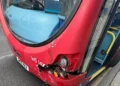

TfL recorded 28,368 bus collisions last year as drivers continue to campaign over fatigue, rest and working conditions.
London buses were involved in an average of 78 recorded collisions a day last year, according to figures published by Transport for London.
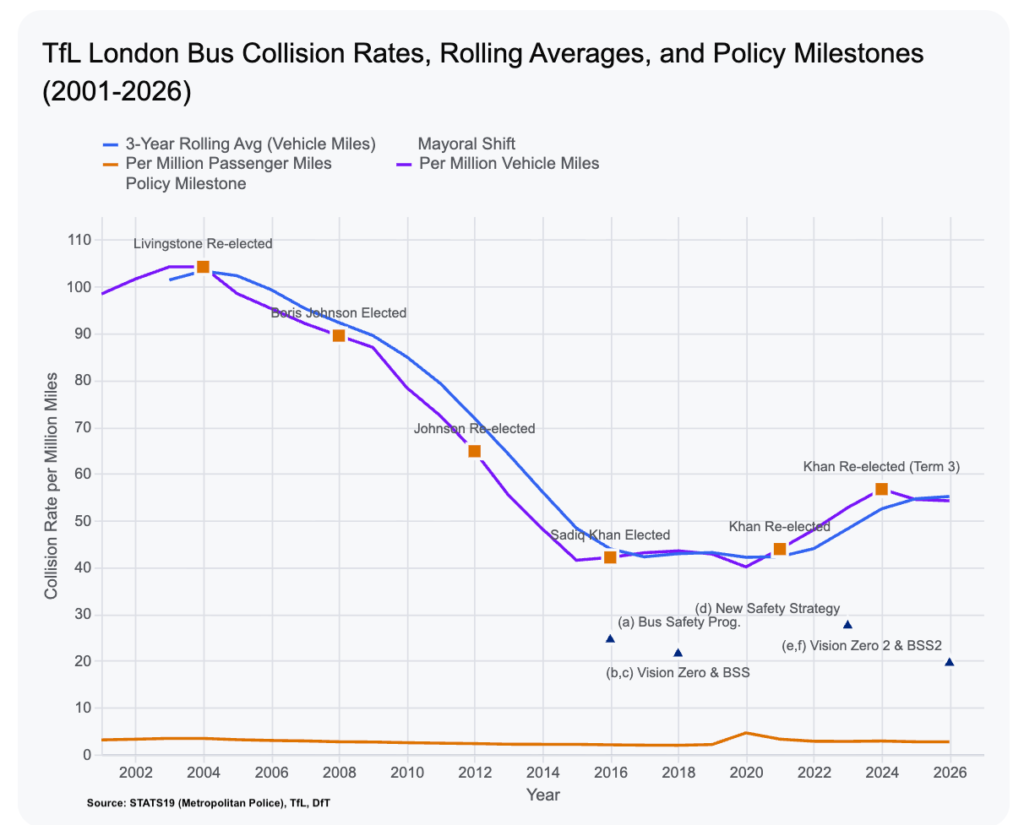
TfL recorded 28,368 collisions involving London buses in 2025, equivalent to 78 incidents a day. That compares with 27,408 collisions recorded in 2016, when Bus Mileage was 4% higher and London’s Bus Fleet was 11% larger.
When corrected for buses’ decreased presence on London’s roads and plotted against TfL’s recent Bus Safety Announcements, this collision trend reflects a shocking reverse of that occurring under Mayor Khan’s predecessors.
THE KEY POINTS
At a glance
- TfL recorded 28,368 bus collisions in 2025, averaging 78 per day.
- Drivers are campaigning for a 12-point Bus Drivers’ Bill of Rights.
- The London Assembly unanimously backed the Bill of Rights in July.
- TfL does not require operators to identify if fatigue contributed to collision incidents.
Led by Kevin Mustafa, independent Bus Drivers organised a march and rally at TfL’s Palestra headquarters in November 2024 calling for a 12-point Bus Drivers’ Bill of Rights to be inscribed into TfL’s Framework Bus Services Contract, i.e., the non-negotiable language TfL insists bus operators include in each bus contract. The current version of TfL’s Framework Bus Services Contract is dated 1 January 2016.
The Bill of Rights guarantees Bus Drivers, among other rights, safe schedules without forced overtime, proper rest breaks, clean toilet and rest facilities, safe and well-maintained buses, protection for drivers raising safety concerns and working heating and cooling in bus cabs.
The Bill of Rights Campaign has been working relentlessly since 2024, with drivers returning to Palestra after the London Assembly unanimously backed the Bill of Rights in an Assembly Motion in July.
Assembly Members called on the Mayor and TfL to formally recognise the Bill of Rights and amend the Framework Bus Services Contract to ensure minimum standards on rest breaks, welfare facilities, vehicle maintenance and driver protections are enforced.
Having working air conditioning in bus cabs during the summer is just one of the 12 protections sought under the Bill of Rights.
On 9 September, City Hall hastily announced that TfL, London’s bus operators and Unite had agreed that every bus driver cab should meet a modern air-conditioning standard by the end of May 2027
The agreement followed the eighth summer of Khan’s Mayoralty where drivers repeatedly provided well-evidenced concerns about extreme heat and ineffective cooling systems in bus cabs, with more than 1,500 Arriva London North drivers voting to take industrial action about hot cabs in August.
On 24 September, BBC Local Democracy Correspondent Kumail Jaffer reported that the Mayor was already “backtracking” on this 9 September announcement.
Fatigue-Inducing working schedules have long been a well-evidenced concern of Bus Drivers.
Unite regional officer Nadine Edwards told MyLondon’s London Brief: “Bus drivers are so tired they’re literally falling asleep at the wheel.” She described fatigue as an “epidemic”.
Discussing a Unite survey, Ms Edwards said 48 per cent of responding drivers had experienced a close call because of fatigue in the previous 12 months, while more than 60 per cent reported being forced to work overtime each week.
Those warnings are not new.
Independent Research by Loughborough University commissioned by TfL and published in July 2019 found 21 per cent of surveyed drivers reported having to fight sleepiness at least two or three times a week, while 36 per cent said they had experienced a close call because of tiredness during the previous year.
London Bus Forums News continues to hear directly from drivers about the pressures of the job.
During strike action at Bow Bus Garage earlier this year, drivers described long duties, reduced recovery time and working patterns they said left insufficient time to properly rest between shifts.
One driver told London Bus Forums News: “We’re human. But they’re treating us like we’re machines.”
Drivers who spoke to London Bus Forums said the issue went beyond difficult shifts, raising concerns about concentration, alertness and the ability to perform a safety-critical role properly.
Some said certain duties could leave around nine-and-a-half hours between shifts before travelling home, eating, sleeping and preparing to return to work were taken into account.
TfL has recently admitted that it does not hold information within its collision data showing whether fatigue was a contributory factor in individual bus collisions, which begs the question: why is TfL not monitoring this undoubtedly causal factor?
Tom Kearney, founder of London Bus Watch and a supporter of the Bus Drivers’ Bill of Rights campaign, told London Bus Forums News:
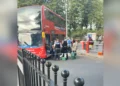
“The recent crash in Penge is just another troubling reminder that the operational safety performance of London’s public bus fleet is worse than when London’s “Vision Zero” Mayor took office. It is also a worrying reminder of the fact that behind every bus collision is a bus driver, many of whom have been reporting for years that their working conditions are unsafe and make potentially lethal bus crashes both more frequent and inevitable.
“The Mayor’s persistent rejection of the Bus Drivers Bill of Rights clearly indicates to me that his Vision Zero programme’s motto that “no death or serious injury on London’s roads is acceptable or inevitable” is not worth the paper it’s printed on. In fact, because TfL executives have still been paid performance bonuses every year that these collisions have increased, I can only assume that the Mayor must share his TfL’s Executives’ view that these too frequently lethal bus crashes are both inevitable and acceptable.”
City Hall disputes the suggestion that collision figures alone show TfL’s wider bus safety programme has failed.
The Mayor has resisted calls to write the Bill of Rights directly into TfL’s bus contracts, arguing that many of the protections sought by drivers are already covered by legislation, agreements and existing requirements.
In August, the Mayor said drivers deserved to be “respected, protected and supported”, but argued that working with operators and Unite was preferable to rewriting contracts to repeat existing protections.
Drivers, meanwhile, continue to press TfL to make the Bill of Rights contractually enforceable across London’s bus operators.
The collision data cannot establish whether fatigue or working conditions caused individual incidents, but 28,368 collisions involving London buses were recorded last year.