


The new bus shelters are part of TfL’s Bus Action Plan, which aims for 80% of London journeys to be made by public transport or active travel by 2030. The trial will see shelters upgraded or replaced in boroughs including Barking & Dagenham, Camden, Croydon, Hackney and Westminster, with sites chosen based on demand, shelter condition, and local crime rates.
So what’s different? Expect brighter lights to help passengers feel safer and make bus stops easier to spot, especially during dark winter evenings. The seats have been redesigned, with priority spaces and more support for people with mobility needs. Some shelters now have CCTV, and the roof’s new reflective red vinyl gives a nod to London’s iconic bus brand.
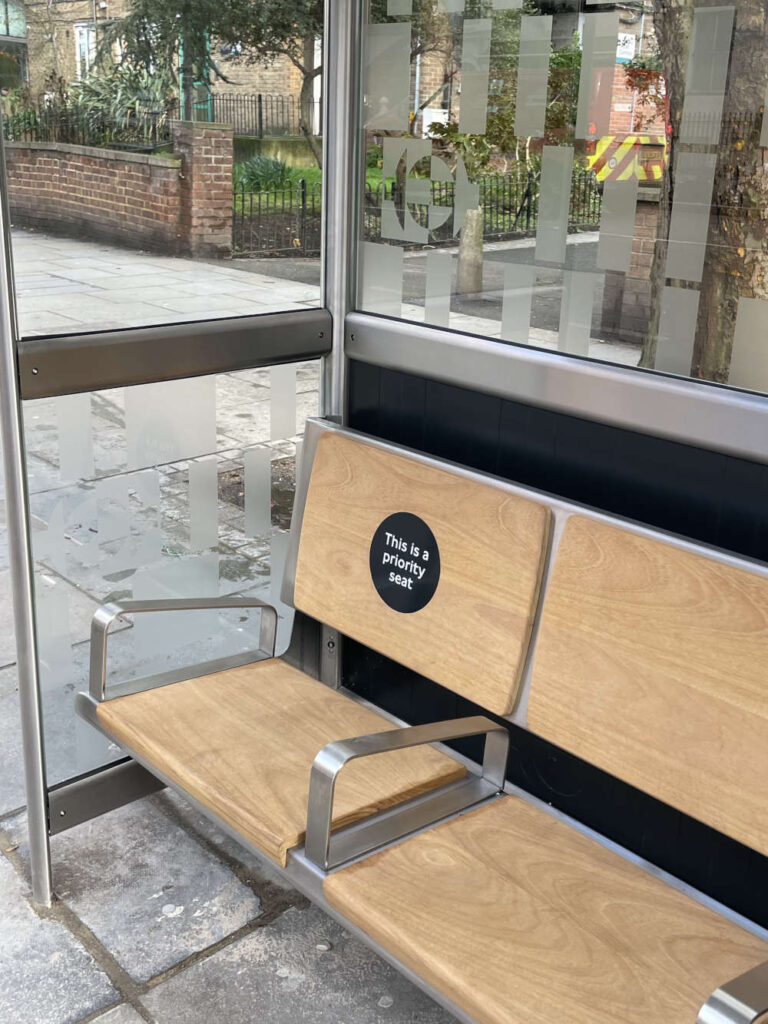
© TfL
TfL says the materials being used are tougher and more sustainable, with a modular construction that should make repairs quicker and cheaper. The hope is that these changes will also make the shelters less prone to vandalism.
Public Feedback on London’s Bus Shelters
Only the Metropolitan Police will have access to camera feeds. The Met is the data controller and access, and release of data is covered by their policy and processes in line with data protection laws.
For many people, these changes are long overdue. London’s bus stops can be old, inconsistent and, in some cases, uncomfortable or inaccessible for certain passengers. With more than five million journeys made on the network each day, TfL wants every waiting environment to be as good as possible.
Feedback is a big part of the trial. TfL has worked with disability groups, charities, and organisations like London TravelWatch and the RNIB to make sure all voices are heard. Passengers at trial sites are being encouraged to share their experiences, both good and bad, so that the final designs can be tweaked before any citywide rollout.

© TfL
The trial will also see new shelters installed at locations which previously had none, and refurbished shelters redeployed to busy stops that lacked cover. In total, around 20 new Landmark London shelters will go up, while 11 refurbished units will be moved to high-demand areas.
Safety is a core focus. A TfL trial of CCTV at bus shelters in 2024 found that 80% of 1,000 women surveyed felt safer with cameras in place, and 73% said they’d be more likely to travel by bus as a result. The current trial will further test whether CCTV can help reduce crime or anti-social behaviour at bus stops.
TfL bosses say this project is about more than just modernising infrastructure. “This initiative reflects our commitment to creating a bus network that feels safer, more welcoming and easier to use,” said Carl Eddleston, TfL’s Director of Streets and Network Operations. “We are keen to hear directly from those who use these shelters so we can incorporate their feedback into future designs.”
London’s Deputy Mayor for Transport, Seb Dance, said: “The Mayor and I are committed to making sure our transport network is safe and seamless for everyone to use… We’re pleased to see TfL working to improve accessibility and safety across the bus network, trialling innovative new approaches to ensure passengers have the best possible journeys.”
Michael Roberts, CEO of London TravelWatch, believes the changes will make a real difference. “Many people – particularly women and girls – can feel unsafe waiting at bus shelters after dark, so better lighting and CCTV will go a long way to help them feel more safe and secure. Our recent research also found that a third of Londoners wanted better places to sit and rest, so more comfortable bus shelters will no doubt be welcomed by many people, and particularly those with mobility issues.”
TfL is keen to stress that the new shelters are only one part of a much wider plan to improve bus travel. The agency is also investing in zero-emission buses, more bus lanes, and better real-time information for passengers. The Superloop express bus network is expanding, adding millions of kilometres to the capital’s routes.
If the trial is a success, Londoners could see the new shelters rolled out across the city in the years ahead. Until then, TfL says it will be listening carefully to feedback to make sure the shelters meet the needs of everyone who uses them.
To read more Transport for London news, click here.












The initiative for upgraded bus stops is a very good idea . However it would be greater if one of those bus stops are placed at New Cross Bus garage where the Route 36, 136, 177,436 etc etc served . As that area has never had a bus stop and passengers are always left standing in the elements to suffer.