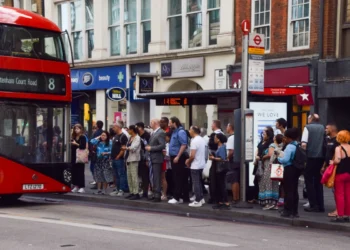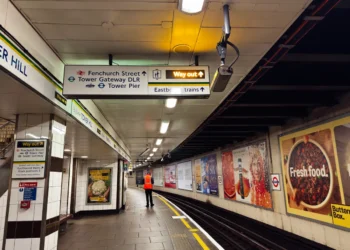

Drivers have raised concerns over fatigue and longer shifts as the RMT calls on Sadiq Khan to intervene in the dispute
Seven in 10 London Underground workers surveyed by the RMT say the demands of their job have negatively affected their mental health, as Tube drivers begin a series of strikes over working conditions.
The survey, published on 26 November 2026, involved more than 700 frontline staff, including train drivers and station workers.
THE KEY POINTS
At a glance
- Seven in 10 Tube workers surveyed by the RMT said their job had negatively affected their mental health.
- Nearly 90 per cent said their work had become more demanding over the past three years.
- Two-thirds reported frequent sleep problems, while nearly half said the risk of a safety incident often or always caused them stress.
- Seven further 24-hour strikes are planned between December 2026 and February 2027.
Two-thirds of respondents said they frequently suffered from sleep problems linked to shift work or the demands of their job, while nearly half said the risk of a safety incident often or always caused them stress.
Nearly 90 per cent of Tube workers surveyed said their jobs had become more demanding over the past three years.
The dispute centres on what TfL describes as a voluntary four-day working week for Tube drivers, which the RMT argues would undermine existing working conditions.
RMT shared accounts attributed to Tube drivers who raised concerns about fatigue, longer shifts and the impact of the proposed changes on their lives outside work.
One unnamed driver was quoted as saying: “I currently drive a manual line and after a full 8 hour shift, I am mentally fatigued from the constant concentration. I can’t imagine working longer days. I don’t know how I’d function for my family and responsibilities.”
Another driver expressed concerns about their ability to continue in the role until retirement, fearing that longer working days would leave them overwhelmed and overworked.
The RMT has called on Mayor of London Sadiq Khan to intervene in the dispute, a move supported by two-thirds of those surveyed.
The union’s general secretary, Eddie Dempsey, said members were being asked to work in an “increasingly challenging and draining environment”.
He criticised the Mayor for failing to act on calls made by the Trades Union Congress last year to hold a summit to improve industrial relations across London’s transport network.
The union said it had written to Transport for London (TfL) confirming it remained available for further talks.
A spokesperson for the Mayor, in a statement reported by ITV News, urged TfL and the RMT to continue negotiations to avoid further disruption to Londoners and businesses.
Tube drivers began a 24-hour strike at midday on Thursday after talks at Acas failed to resolve a dispute over proposed changes to working arrangements.
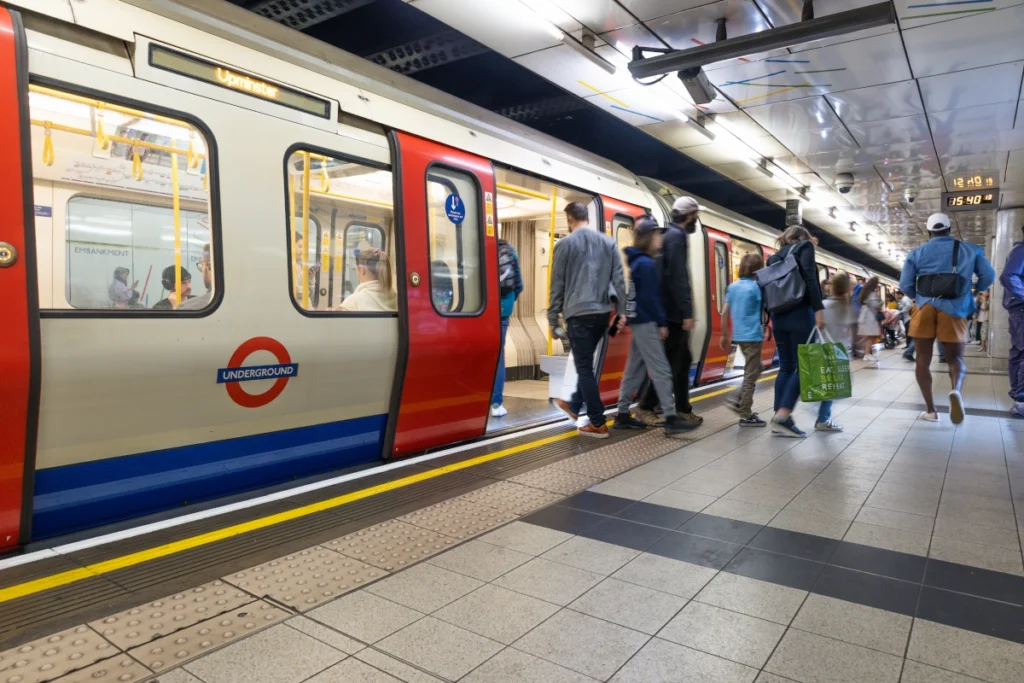
Image: iStock / Getty
Speaking to Times Radio earlier today, Dempsey insisted the union was not opposed to introducing a four-day working week.
“We’re in favour of a four-day week. The problem with this is longer working shifts,” he said.
He argued that drivers who rejected the proposed arrangements would lose existing employment protections, including the ability to transfer between depots and switch between full-time and part-time work.
Dempsey also claimed drivers could face changes to their shifts with as little as 24 hours notice.
TfL says its revised proposals would allow drivers to remain on a five-day working pattern at their existing depot, subject to accepting the new terms and conditions.
In a statement issued on 23 November, TfL said the proposed working patterns had been assessed using industry-standard fatigue management tools and would reduce fatigue in the vast majority of cases.
The proposals have already been accepted by Aslef, the other union representing Tube drivers.
Further 24-hour walkouts are scheduled for 17 and 19 December, with five more planned for January and February 2027.
TfL has been approached for comment.