The long-awaited new trains for the Docklands Light Railway (DLR) have finally begun carrying passengers, marking the first significant upgrade to the fleet in over a decade.
Transport for London (TfL) confirmed that the first of 54 new trains entered service in September, with more expected to be rolled out gradually through 2025. The new trains aim to replace older units that date back to the late 1980s and early 1990s, as well as provide additional capacity for growing demand across east and southeast London.
The new trains feature walk-through carriages, air conditioning, USB charging ports, real-time travel information, and improved accessibility. They are also designed with enhanced safety and comfort in mind, including dedicated wheelchair spaces, wider doors, and priority seating.
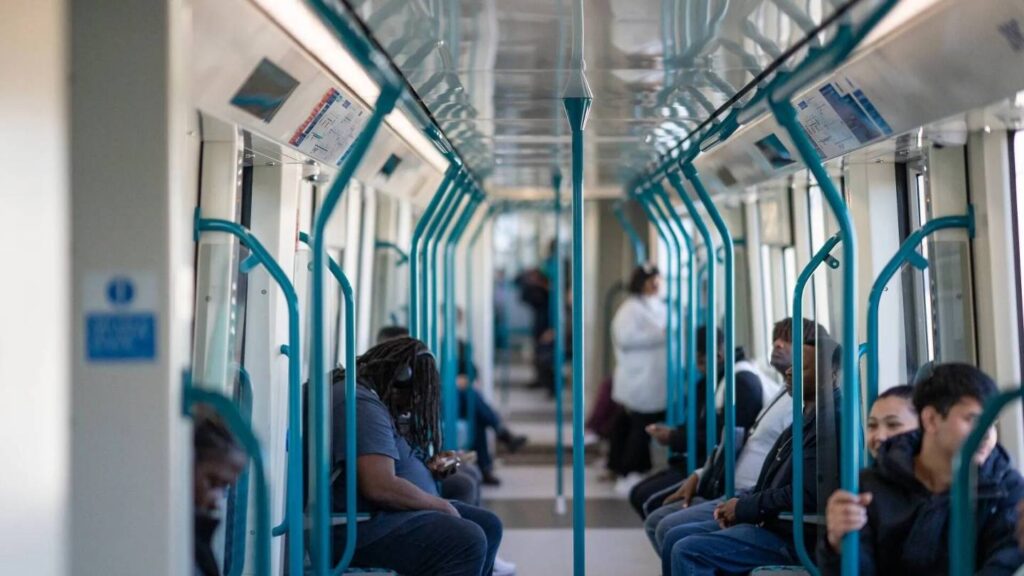
Image © TfL
Unlike their predecessors, which lacked a driver’s cab and were operated remotely, the new trains have a designated driver’s area for greater control and system resilience. This is part of TfL’s commitment to futureproof the DLR network as part of broader efforts to modernise public transport across the capital.

Image © TfL
With over 400,000 daily passengers using the DLR before the pandemic, the network plays a crucial role in connecting key parts of east London, including the Docklands, Stratford, Lewisham, and London City Airport. TfL hopes that the new trains will enhance the overall passenger experience and support new housing and job growth across the region.
The new fleet was manufactured by CAF (Construcciones y Auxiliar de Ferrocarriles) in Spain and funded through a £500 million investment package announced in 2019.
TfL expects all 54 new trains to be in operation by late 2025.